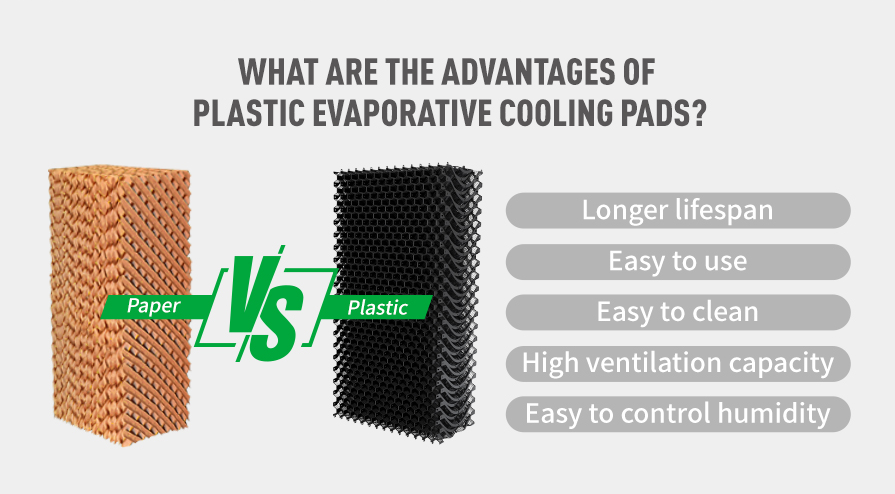
Plastic Pads vs. Paper Pads: Key Differences
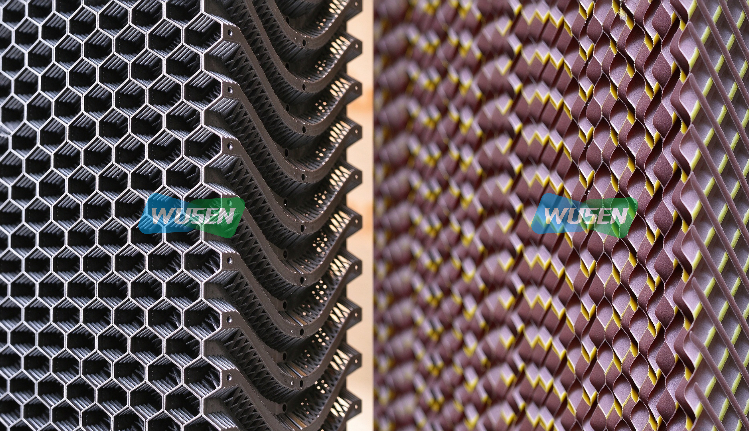
Plastic Evaporative Cooling Pads: Why Modern Livestock Farming and Greenhouse Cultivation Are Switching to Plastic
For a long time, cellulose paper pads have been the standard choice for evaporative cooling systems. However, as the livestock and greenhouse sectors place increasing demands on the durability and maintenance costs of cooling equipment, plastic evaporative cooling pads are attracting growing interest from professional users.
Plastic Pads vs. Paper Pads: Key Differences
Plastic evaporative cooling pads are made from polypropylene (PP) and manufactured using an injection molding process to create a honeycomb grid structure. Compared to traditional cellulose paper pads, there are significant differences in several areas:
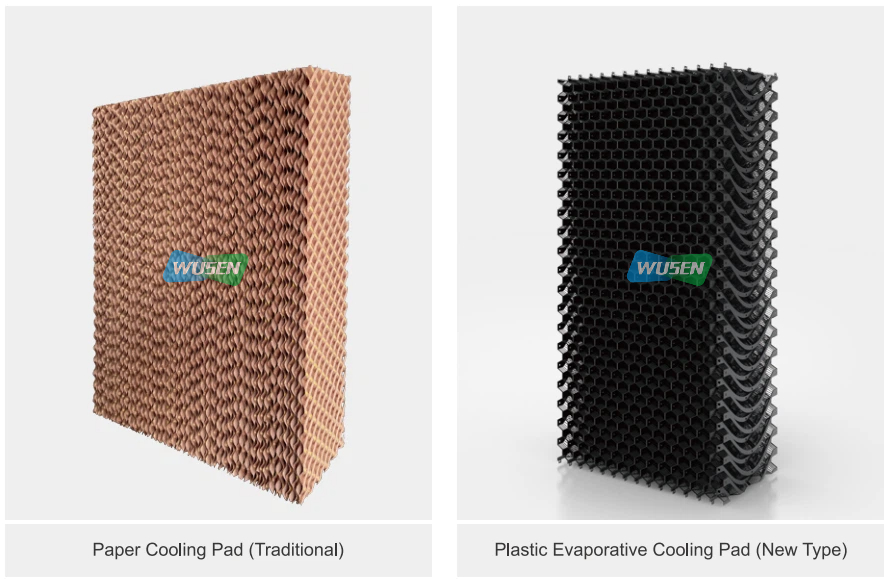
Service Life and Durability
Paper pads typically have a lifespan of 1 to 3 years, whereas plastic pads are designed to last 8 to 10 years or even longer. This disparity stems from the inherent weather resistance of the material: plastic pads do not shrink or deform due to repeated wet-dry cycles, nor do they degrade or develop mold in long-term humid environments—issues common to paper pads. WUSEN’s cooling systems utilize PVC or stainless steel components, explicitly highlighting a “longer service life compared to paper pads.”
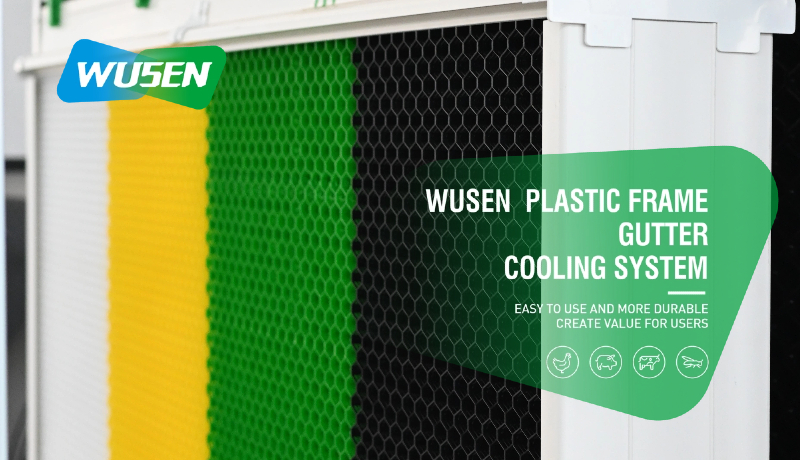
Cleaning and Maintenance
Paper pads feature narrow corrugated channels where dust and minerals easily accumulate; this buildup increases static pressure and causes cooling efficiency to decline over time, while the structure itself is prone to damage during cleaning. In contrast, plastic pads have larger channels that allow for direct washing with high-pressure water jets without compromising cooling performance.
However, there is a specific maintenance factor to note with plastic pads: unlike paper pads, which absorb water via capillary action, plastic pads require a higher volume of circulating water during operation to ensure the entire pad is thoroughly wetted. If a water pump configuration designed for paper pads is used, insufficient wetting may occur, resulting in reduced cooling effectiveness.
Airflow and Humidity Characteristics
Plastic pads typically feature large, U-shaped honeycomb channels, resulting in relatively low static pressure loss as air passes through. Data indicates that the pressure drop is approximately 30% lower than that of traditional pads, leading to energy savings of around 30%. Another noteworthy feature is that the exhaust air humidity from plastic pads is typically about 15% lower than that from paper pads, which actually becomes an advantage in certain humidity-sensitive applications.