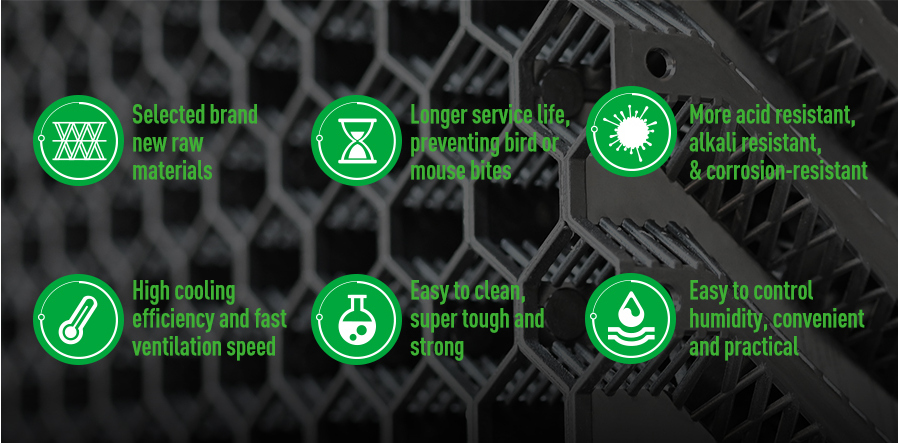
Long-term advantages of plastic evaporative cooling
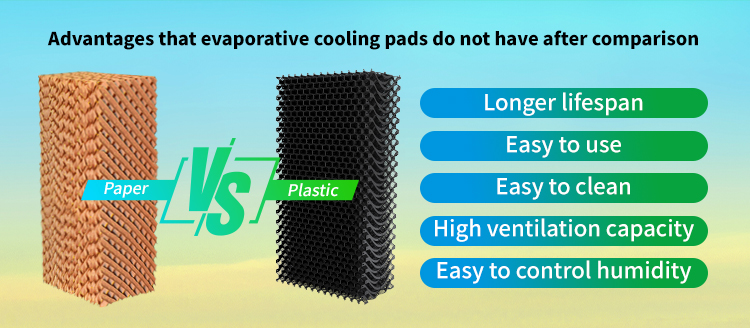
Traditional evaporative cooling pads are typically made of corrugated paper, which, while effective, degrades over time. They are prone to rotting, cracking, and bacterial growth, often requiring replacement every few years. In contrast, plastic cooling pads are made from high-density PP or self-extinguishing materials. This fundamental shift in materials science addresses the major drawbacks of organic media, providing a waterproof, corrosion-resistant, and structurally robust medium.
Advantages in Harsh Environments
In livestock farms, the lifespan of evaporative pads is a major concern. Traditional paper evaporative pads are highly sensitive to minerals and chemicals in poor-quality water, easily leading to scale buildup and clogging. Plastic evaporative pads offer significant advantages in this regard.
The non-porous surface of plastic prevents moisture absorption, significantly reducing algae and bacterial growth. Plastic evaporative pads are also easier to disinfect when cleaning is required; they can typically be rinsed with a pressure washer or treated with detergents that can damage cellulose evaporative pads.
Structural Integrity and Safety
Modern plastic pads, such as those made from self-extinguishing materials, also offer safety advantages in industrial applications. They feature a UV-resistant and light-blocking design to prevent light penetration, thus avoiding the growth of organisms in the medium. Furthermore, their robust structure ensures they maintain their shape and geometry over the long term, guaranteeing stable performance and preventing sagging or settling.