
Evaporative Cooling Pad Application Guide
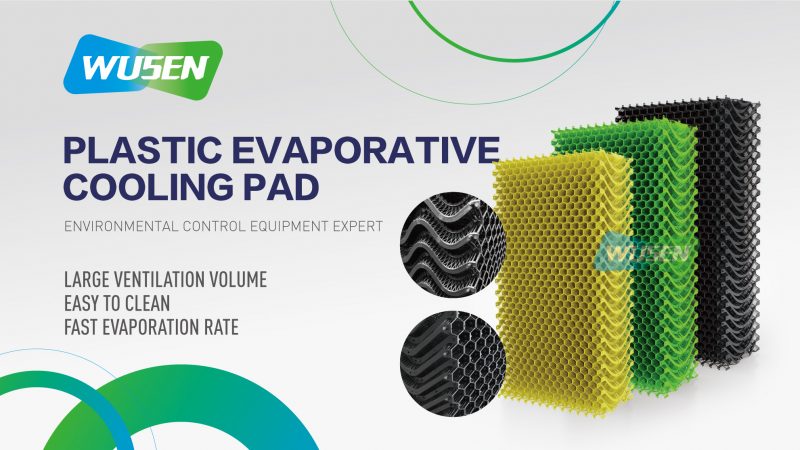
Plastic cooling pads offer exceptional weather resistance, UV resistance, and chemical corrosion resistance. Unlike organic cellulose cooling pads, plastic cooling pads will not rot, sag, or degrade even under prolonged damp conditions. This significantly extends their lifespan, typically lasting for several years with proper maintenance, reducing replacement frequency and long-term costs.
Their non-porous and robust structure prevents scale and algae from deeply depositing. Hard water deposits can be easily removed by rinsing, soaking in a mild acidic solution, or gently brushing without damaging the pad. This minimizes maintenance while maintaining cooling efficiency.
Plastic pads maintain their shape and rigidity even under continuous water flow and high airflow. They do not age or soften over time, ensuring even air distribution and preventing airflow blockages caused by cellulose pad collapse.
While the initial investment may be higher than some disposable cellulose pads, their reusability for multiple seasons makes them economically attractive. The savings from not needing to purchase replacement pads annually often offset the upfront costs.
Their carefully designed structure (typically honeycomb or cross-grooved) ensures even water flow while guaranteeing ample air circulation. This minimizes oversaturation and ensures efficient water use through optimal evaporation.
Plastic pads are suitable for environments with poor water quality or those susceptible to corrosive substances (e.g., certain industrial processes or coastal areas). They are also ideal for intermittent use systems because they do not degrade in a dry state.