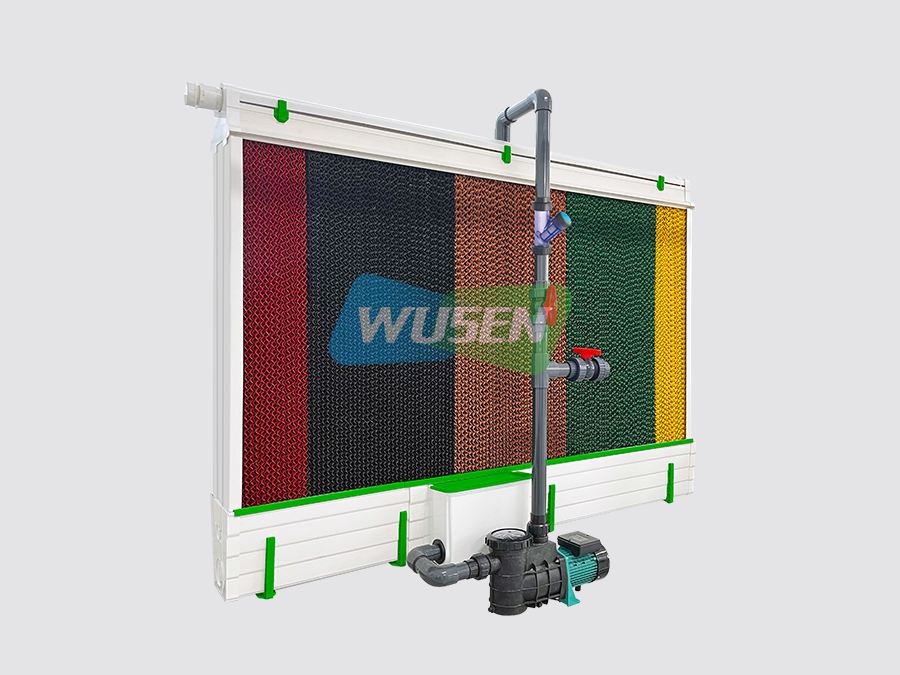
Evaporative Cooling Pads: A Sustainable Cooling Solution

The principle behind evaporative cooling is simple. As warm, dry air flows through a wet cooling pad, moisture naturally evaporates. The heat required for evaporation is absorbed directly from the air, thereby cooling it. The air exiting the pad is both cooled and humidified during this process—all without the need for an external energy source. It is nature’s own cooling method, replicated through advanced engineering.
Modern evaporative cooling pads feature a specialized honeycomb or cross-fluted structure that maximizes the contact area between air and water. This unique design promotes thorough mixing for optimal cooling performance and ensures a continuous supply of water to the pad’s air-intake face—the area where the air is hottest and driest, and where evaporation is most intense.
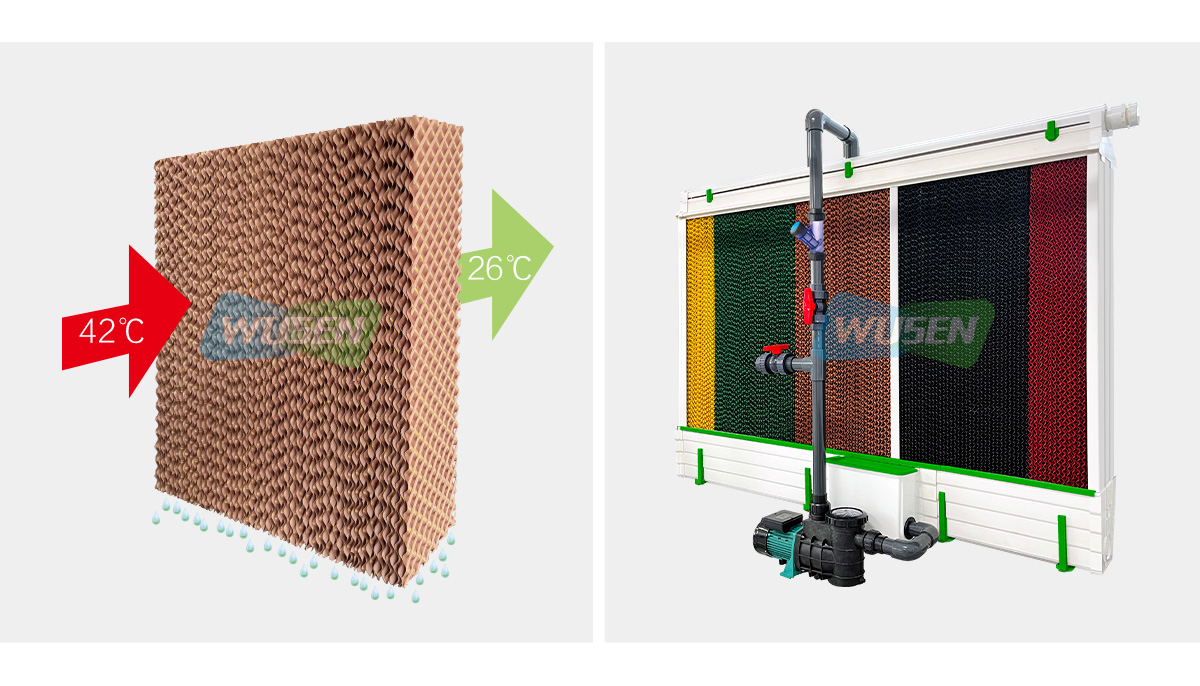
High-quality evaporative cooling pads can lower air temperatures by 10–15°C (18–27°F) while slightly increasing humidity, making them particularly effective in hot, dry climates. Cooling efficiency can reach 80% or higher. Unlike traditional air conditioning systems that recirculate stale indoor air, evaporative cooling systems continuously supply fresh, cooled outdoor air, significantly improving indoor air quality.
Modern evaporative cooling pads are designed for durability. Specially impregnated and treated cellulose paper ensures the product is robust and resistant to rot. Many pads feature a protective edge coating that withstands repeated cleaning, prevents the buildup of algae and minerals, and resists UV damage.