Why Plastic Evaporative Cooling Pads Outperform Traditional Media in Harsh Conditions
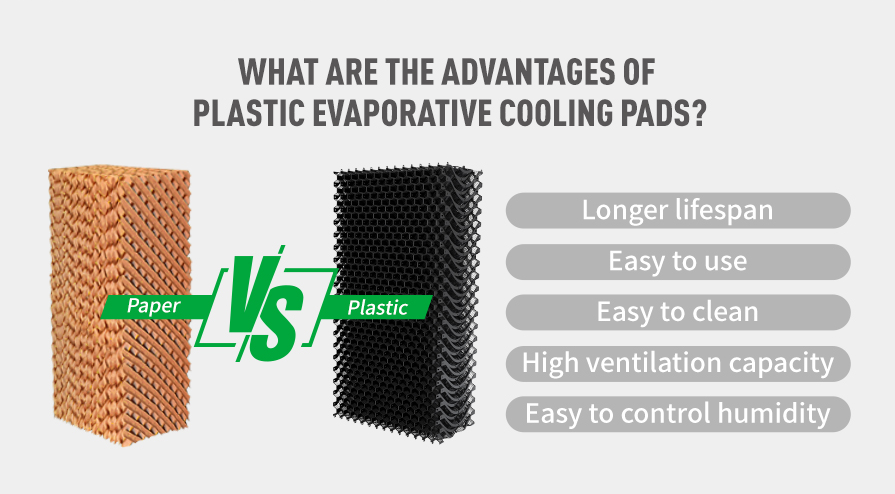
Evaporative cooling remains one of the most cost-effective ways to reduce ambient temperature in large-scale agricultural and industrial facilities. While cellulose (paper) pads have been the industry standard for years, they come with significant limitations, especially in challenging environments. Plastic evaporative cooling pads, constructed from rigid polymers like PVC or polypropylene, offer a transformative alternative. Beyond simple durability, their key advantages lie in their resistance to water quality issues, extreme weather, and biofilm formation—resulting in a system that is both reliable and low-risk.
Unmatched Tolerance to Poor Water Quality (Hard Water & Salts)
In many agricultural regions, water is “hard,” meaning it contains high levels of calcium and magnesium. When this water evaporates in a cellulose pad, the minerals are left behind as chalky white scale. Within months, this scale clogs the pores of a cellulose pad, turning a flexible cooling media into a rigid, blocked brick. Airflow stops, and the pads must be replaced.
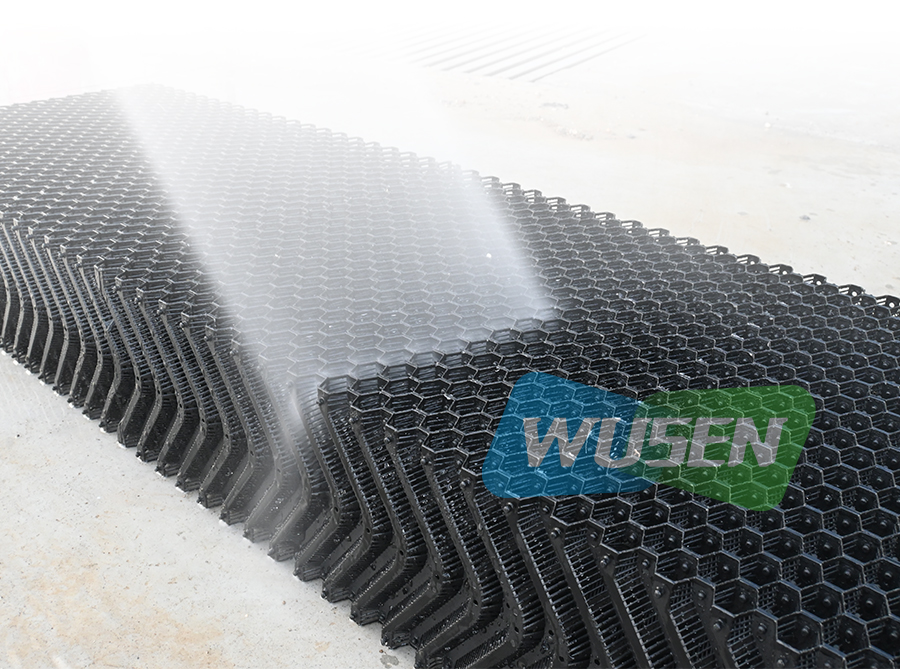
Plastic pads offer a radical advantage here. Because the polymer surface is naturally slick and non-absorbent, mineral scale cannot bond to it as aggressively. Even when scale does form, the open-channel design of plastic pads allows the crystals to be flushed out by water flow or removed via a simple acid wash (cleaning process). Plastic pads do not disintegrate under chemical descaling, whereas cellulose pads dissolve. This makes plastic the only viable choice for facilities using well water or high-TDS (Total Dissolved Solids) water.
Superior Performance in Freeze-Thaw Cycles
Traditional cellulose pads are a nightmare in climates that experience winter. When the cooling system is shut down and temperatures drop below freezing, any water trapped inside the absorbent cellulose fibers expands, turns to ice, and shreds the paper structure. Come spring, the pads literally fall apart into wet mush.
Plastic pads solve this problem completely. Their non-absorbent geometry means water runs over the surface but does not soak *into* the material. When the system drains, the plastic is essentially dry. Ice formation—if it occurs—has no porous matrix to destroy. Plastic pads can survive repeated freeze-thaw cycles without cracking or losing structural integrity, making them ideal for seasonal operations in temperate climates (e.g., greenhouses in the northern United States or Europe).
Natural Resistance to Biofilm and Algae (Without Toxic Cleaners)
Cellulose pads are organic. They are, effectively, food for mold, bacteria, and algae. To keep cellulose pads functional, operators often resort to algaecides, chlorinated cleaners, or UV water treatment. These chemicals are expensive, dangerous to handle, and can be harmful to livestock (poultry, pigs) or employees.
Plastic pads, being synthetic and inert, are not a nutrient source. Furthermore, the smooth surface prevents biofilm (the slimy layer of bacteria) from establishing a foothold. While algae may still grow in the water tank, it rarely colonizes the pad surface itself. This allows operators to run a “cleaner” system with fewer biocides, reducing operating costs and improving workplace safety. For organic farms seeking chemical-free cooling, plastic pads are the only realistic option.