Greenhouse Climate Control: Achieving Optimal Growth and Efficiency
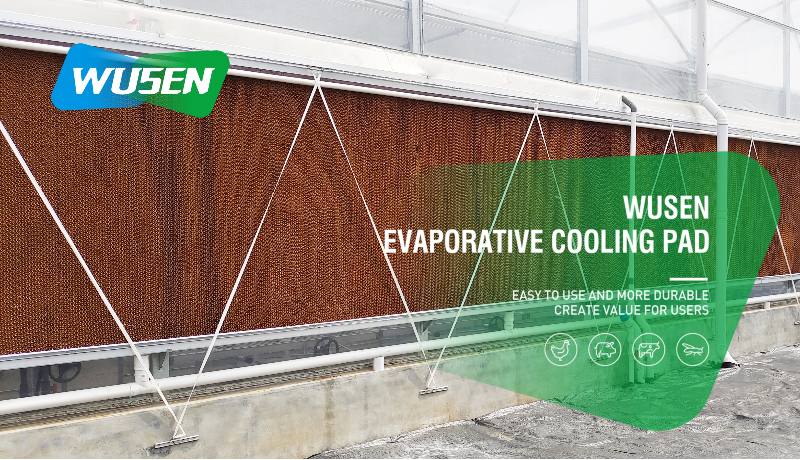
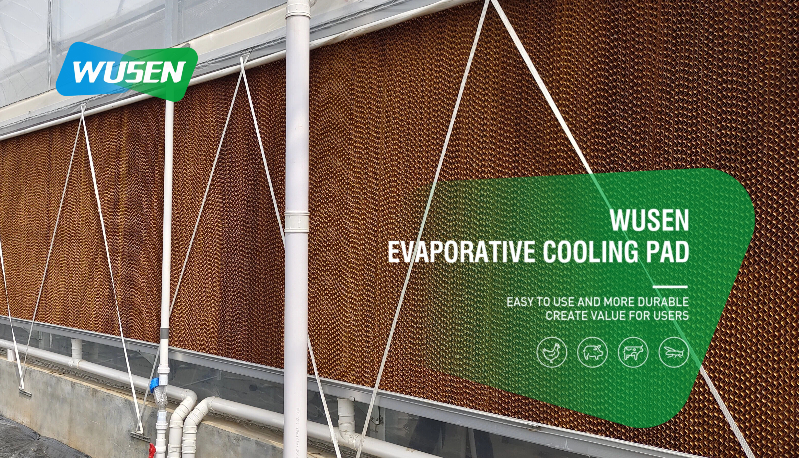
Evaporative cooling systems are one of the most widely used and cost-effective solutions for greenhouse cooling. This system utilizes the principle of water evaporation and heat absorption. Through the coordinated operation of evaporative cooling pads and exhaust fans, cooled outdoor air is introduced into the greenhouse, creating a cool and humid growing environment for crops. In hot and dry climates, this system can lower the greenhouse temperature by 10-25°C (approximately 5-15°C).
Working Principle
The core of the evaporative cooling pad system lies in the natural physical process of “evaporative heat absorption.” When water changes from a liquid to a gaseous state, it absorbs heat from the surrounding environment. During system operation, water is pumped to the top of the evaporative cooling pads, flowing evenly down the pad material and wetting the entire surface. Exhaust fans continuously operate at the other end of the greenhouse, drawing out the hot air from inside, creating negative pressure, and forcing outdoor hot air through the humidified pads into the greenhouse. As the air passes through the evaporative cooling pads, water evaporates, absorbing heat, lowering the air temperature, and increasing humidity, thus cooling the greenhouse.